
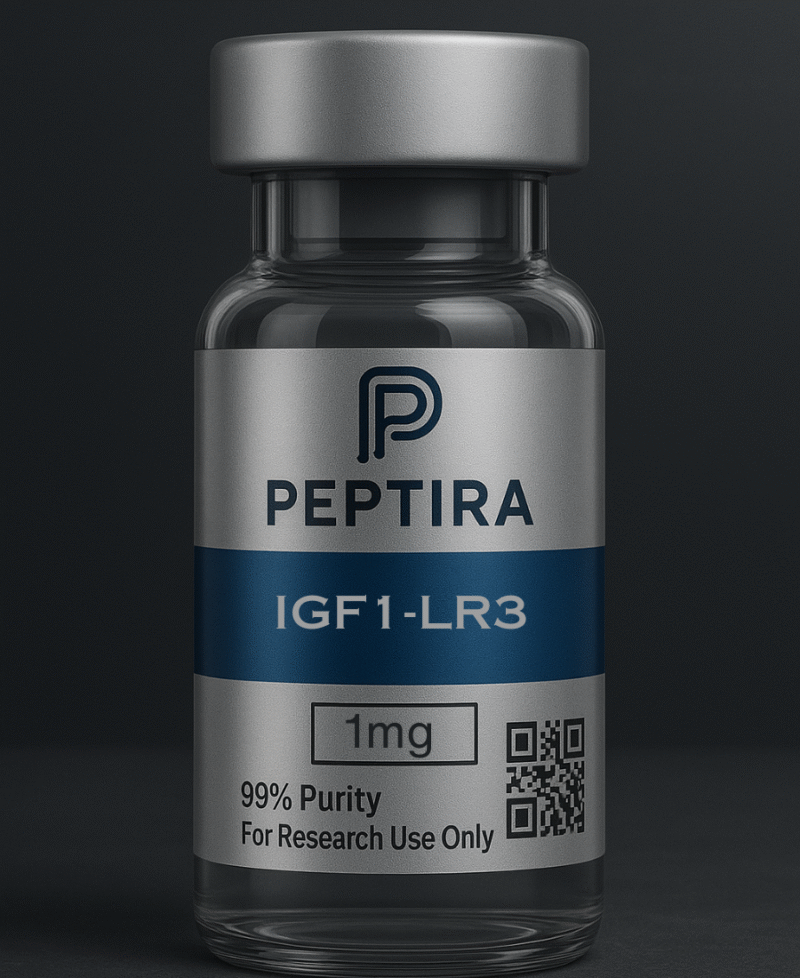
IGF1-LR3 Peptides – Advanced Research Peptide for Muscle Growth & Performance
What Is IGF1-LR3?
IGF1-LR3 Peptides are among the most researched compounds in modern peptide science. IGF-1 LR3 (Insulin-Like Growth Factor-1 Long Arg3) is a modified version of IGF-1 designed with a longer half-life and enhanced biological activity, making it widely studied in laboratories focused on muscle growth, cellular repair, recovery, and metabolic research.
Because of its powerful biological properties, IGF1-LR3 peptides are frequently used in scientific studies examining cell proliferation, tissue regeneration, and anabolic pathways. Researchers across the United States, United Kingdom, Germany, France, Switzerland, Denmark, Australia, and the rest of Europe continue to explore its potential role in improving muscle hypertrophy, recovery processes, and overall performance-related mechanisms.
IGF-1 LR3 differs from standard IGF-1 due to its extended amino acid structure, which increases its stability and allows it to remain active longer in biological systems. This enhanced stability has made it one of the most sought-after peptides in research environments.
Why Researchers Choose IGF1-LR3 Peptides
Scientists and peptide specialists consider IGF1-LR3 peptides highly valuable because of their unique interaction with growth factor pathways. Compared to traditional IGF-1 compounds, LR3 variants are engineered to offer stronger receptor binding and longer systemic activity, which improves consistency during laboratory experiments.
Research Advantages
-
Extended half-life compared to standard IGF-1
-
Increased resistance to IGF-binding proteins
-
Enhanced receptor activation in laboratory studies
-
Highly researched for muscle development and tissue repair mechanisms
-
Frequently examined in metabolic and cellular growth research
These characteristics make IGF1-LR3 one of the most powerful peptides in growth-factor research.
Potential Research Applications of IGF1-LR3
Muscle Growth and Hypertrophy Research
IGF-1 LR3 peptides are frequently studied for their ability to stimulate pathways associated with muscle cell growth and regeneration. Researchers analyze how the peptide interacts with muscle tissue to increase protein synthesis and cellular growth.
Recovery and Tissue Repair Studies
Another major focus of IGF-1 LR3 research is tissue regeneration. Laboratory studies often examine its potential influence on repairing muscle fibers following stress or strain.
Metabolic and Performance Research
Many peptide research facilities explore IGF1-LR3 peptides for their potential role in nutrient partitioning, glucose metabolism, and cellular energy utilization.
Cellular Growth and Anti-Aging Research
Due to its relationship with growth hormone signaling pathways, IGF-1 LR3 is also studied in longevity and regenerative science, where scientists investigate its role in cellular renewal processes.
Premium Quality IGF1-LR3 Peptides
Our IGF1-LR3 peptides are produced in high-standard laboratory environments to ensure maximum purity, stability, and research consistency. Each vial undergoes strict testing procedures to guarantee quality for scientific applications.
Product Highlights
-
High-purity IGF1-LR3 peptide compound
-
Laboratory tested for research accuracy
-
Secure packaging and reliable shipping
-
Stable peptide formulation for extended research use
-
Trusted by peptide researchers worldwide
Our products are distributed globally, serving research communities across the USA, UK, Germany, France, Switzerland, Denmark, Australia, and the entire European region.
Why IGF1-LR3 Peptides Are Popular in Peptide Science
Longer Half-Life
One of the major advantages of IGF-1 LR3 is its extended half-life of approximately 20–30 hours, compared to natural IGF-1 which lasts only a few minutes. This makes it far more efficient for long-duration studies.
Strong Receptor Activity
IGF-1 LR3 interacts strongly with IGF-1 receptors, making it extremely useful in experiments involving cell signaling and anabolic pathways.
Reduced Binding Protein Interference
Unlike natural IGF-1, the LR3 modification significantly reduces interaction with IGF binding proteins, allowing researchers to study its effects with fewer limitations.
Global Demand for IGF1-LR3 Peptides
The demand for IGF1-LR3 peptides continues to grow in scientific communities worldwide. Researchers in Europe, the United States, and Australia are increasingly incorporating this peptide into advanced studies exploring muscle biology, regenerative medicine, and metabolic science.
Because of its powerful biological profile, IGF-1 LR3 remains a top peptide choice among laboratories seeking reliable compounds for cutting-edge research.
Important Research Notice
IGF1-LR3 peptides are intended for laboratory research and scientific study only. They are not intended for human consumption, medical use, or therapeutic applications.
Conclusion
IGF1-LR3 peptides represent one of the most promising compounds in peptide science. With its extended activity, strong receptor interaction, and broad research applications, it continues to play an important role in studies focused on muscle growth, recovery, metabolic function, and cellular regeneration.
For laboratories and peptide researchers seeking high-purity research peptides, IGF-1 LR3 remains a powerful and widely studied compound in modern biotechnology and performance research.
| QTY | 1MG Single Vial, 1MG Trio (3 Vials), 1MG Half Kit (5 Vial) 1MG Full Kit (10 Vials) |
|---|
Be the first to review “IGF1 -LR3”
Related products
peptides
peptides
peptides
peptides
peptides
Reviews
There are no reviews yet.